Drive Electric
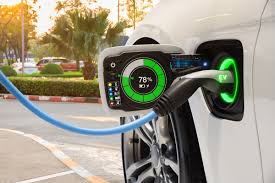
Summary: EVs reduce your emissions, are fun to drive, and are less expensive to operate and maintain!
Description
Why drive an Electric Car? EVs reduce your emissions, are fun to drive, and are less expensive to operate and maintain. There are a lot of great models on the market and the choices are just getting better and better, click here to know more.
Where can I read a quick overview about EVs? Click on the AAA 101 Guide.
Where can I buy an EV? The answer to that is simple: you can purchase an EV from the same place you would buy a conventional vehicle. Do your research, find a brand that suits you, then visit your local dealerships for a test drive.
How can I compare EVs? Click here to use the National Grid Electric Vehicle Hub EV Comparison Tool.
What programs and financial incentives are there? In Massachusetts, EV owners can participate in a number of programs for keeping costs down, including an off-peak charging program, as well as rebates for the purchase or lease of certain types of EVs. To learn about the programs and incentives in Massachusetts, click on the link National Grid Electric Vehicle Hub link here.
State and Federal Incentives
You may qualify for a credit up to $7,500 under Internal Revenue Code Section 30D if you buy a new, qualified plug-in EV or fuel cell electric vehicle (FCV). The Inflation Reduction Act of 2022 changed the rules for this credit for vehicles purchased from 2023 to 2032.
The credit is available to individuals and their businesses.
Starting in 2023, households in low income or rural areas are eligible for a 30% tax credit up to $1,500 to install an electric vehicle charger. Estimate your savings via this calculator from Rewiring America.
United States Department of Energy, New Energy Tax Credit
Consumers can receive up to $7,500 in federal tax credits when purchasing a new, eligible electric vehicle and up to $4,000 when purchasing a used, eligible electric vehicle. As of January 2024, these tax credits are redeemable at the point of sale with dealerships that have registered with the IRS.
Massachusetts Department of Environmental Protection Electric Vehicle Incentive Program (MassEVIP)
Grants for Fleets - MassEVIP Fleets is a Massachusetts DEP rolling grant program aimed at making electric vehicles (EV's) more widely available across the state. The program provides incentives for public entities to buy or lease EVs. Funding amounts vary based on vehicle type and means of acquisition with a maximum of $7,500 per vehicle.
Grants for Workplace Charging - MassEVIP Workplace & Fleet Charging is aimed at making EV charging stations more widely available across Massachusetts. The program provides incentives for employers and fleet operators to acquire and install Level 1 and Level 2 EV charging stations. Applicants with 15 or more employees in non-residential places of business are eligible.
Access Energy.gov to understand how to claim your tax credit.
Where can I find more information? Access Electric Vehicle Charging Information and DriveGreen or go to the DEEP DIVE tab.
Deep Dive
Emissions, anyone? In Massachusetts, transportation accounts for a whopping 42% of our greenhouse gas emissions. Electric vehicles, in combination with renewable, carbon-free electricity generation, can dramatically reduce your greenhouse gas emissions because they have lower lifecycle emissions than gas-powered cars, even after accounting for extra emissions from battery manufacturing. (Buy 100% renewable electricity at a small premium with Green Powered.)
With a renewably-powered EV, the only source of emissions comes from the manufacturing process. If the electricity comes from fossil fuels, driving an EV is obviously not entirely pollution free. Still, according to the Union of Concerned.
What are the benefits of buying an EV?
-
Environmentally Friendly
Gas-powered vehicles are a major cause of climate change, accounting for a large percentage of greenhouse gas emissions in the U.S. EVs on the other hand are emissions-free-and that's great news for our planet and our health. -
Low Cost of Ownership
While in some cases an EV may cost more money up front, they may be more economical in the long run. In fact, all-electric models are proven to require less maintenance than gas-powered vehicles. -
Financial Incentives
Incentives for EVs and charging are available from a wide variety of entities. Funding sources are available at the state and federal levels, as well as through National Grid. See “What programs and financial incentives are there?” and State and Federal Incentives below for more details. -
Safe
EVs are incredibly safe. All EV models meet the Federal Motor Vehicle Safety Standards and undergo the same rigorous safety testing as gas-powered vehicles. -
Fun to Drive
With their ability to travel longer distances, smooth and quiet ride, advanced infotainment systems and drive assist features, today's higher-performance EVs are more fun to drive than ever! -
Charge at Home
EVs have the ability to tap into the existing electricity supply at your home. That means most of the time, you can "fuel up" without visiting the gas station.
Swampscott has several public charging stations:
-
Townhall Right, 22 Monument Ave
-
Townhall Left, 23 Monument Ave
-
High School #1, 200 Essex St
-
High School #2, 200 Essex St
-
High School #3, 200 Essex St
Range anxiety? Fully electric vehicles (EV) are constrained by their battery capacity, but the battery range improves by the year. For example, the new highly-rated Chevrolet Bolt has a range of 259 miles. The Tesla Model 3 has a range of 250-322 miles depending on the option you choose and the network of charging stations keeps expanding, with many apps that help you locate public charging stations and if they are available in real time. There are, for instance, 1,870 Tesla Supercharger Stations in North America (these can't be used by other makes, though). Most chargers are located conveniently at restaurants or roadside rest stops. You can enter “charging stations Swampscott MA” into Google Maps and you’ll see all the different charging stations in the neighborhood.
There are over 2,550 Tesla Supercharger Stations with 27,777 Superchargers in North America. You can use Tesla Destination Charging locations, usually located conveniently at restaurants or roadside rest stops, to not only charge a Tesla but with some other EVs.
You can plug your car into any standard 110-120V outlet, but many EV and plug-in owners install a Level II 240 Volt charger, which speeds up charging time up to 6X faster. Equipment plus installation of these chargers cost in the range of $1,000 to $1,200. This cost is tax deductible. And we can recommend an electrician to install one for you.
Steps to Take
To get started:
1. Go to AAA 101 Basics to read an overview of electric vehicles.
2. Go to the National Grid Electric Vehicle Hub to learn about the programs to keep costs down and rebates for the purchase or lease of certain types of EVs.
3. Go to DriveGreen for information on how EVs work, EV maintenance, and the models that are available, etc. Take the pledge (non-binding) to subscribe to their quarterly email newsletter with news on the latest models and deals, and invitations to EV showcase events.
4. You can also use the PlugStar “Browse Electric Cars” tool, an interactive online guide of models that helps you decide which vehicle is right for you by having you answer a few questions. 1) how many miles you drive per day; 2) what type of long trips you make; and 3) how much passenger and cargo space you need?
5. Ensure you have convenient access to a standard 110-120V outlet to plug in your EV. Or, install a Level II 240 Volt home charging infrastructure which speeds up charging time up to 6X faster with links to charging apps such as (ChargePoint, PlugShare, EVgo).
Once you know you want to go ahead
-
Ready to walk into a dealership? Don't assume these dealers will offer you the DriveGreen deals if there are any: you need to bring the deal to them.
-
Test drive cars at the dealers. It's free, no commitment!
- All Actions